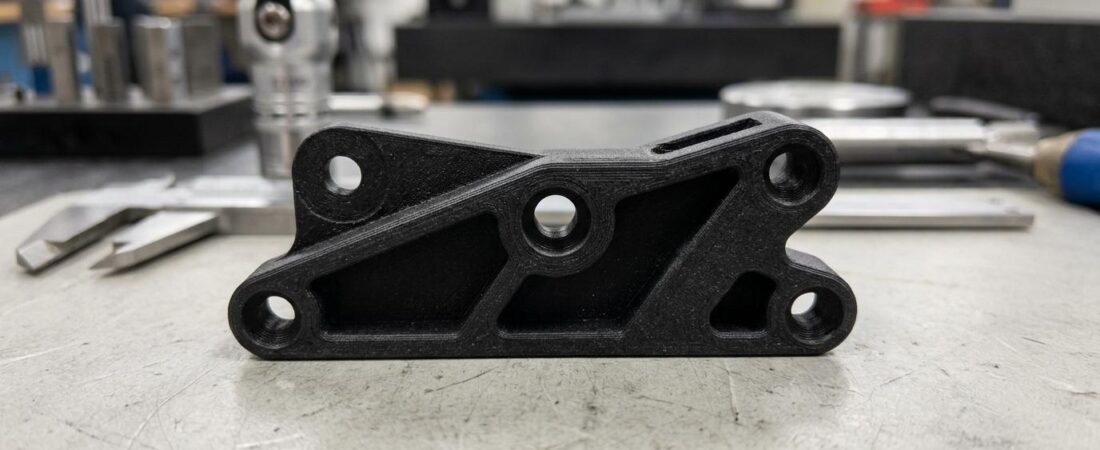
When plastic parts move from concept to repeatable supply, the right manufacturing partner can change the pace of a project. Contract manufacturing gives engineering, procurement and operations teams a practical way to source parts without carrying every process, machine and material in house.
For Australian businesses, that often means a faster path from prototype to production parts, fixtures, replacement components and low volume manufacturing, with fewer delays between design changes and delivered hardware.
That matters when a part has to work in service, not just look right on a bench.
Contract manufacturing for plastic parts from prototype to production
A strong contract manufacturing model is built around flexibility. Some projects begin with a single proof-of-concept part. Others need pilot batches, production tooling, or repeat orders for maintenance teams spread across multiple sites. The common requirement is reliable output, clear communication and a process that does not stall when the design changes.
For plastic parts, contract manufacturing can cover far more than basic fabrication. It may include design for manufacture feedback, material selection, prototyping, production planning, secondary finishing, inspection and logistics. When these stages are handled in a connected workflow, teams can reduce rework and gain more confidence before larger orders are released.
PartMade3D focuses on industrial additive manufacturing and custom manufacturing for production parts, tooling and prototypes. That is a strong fit for customers who need industrial-grade plastic components, fast quoting and access to materials suited to demanding operating conditions.
After the initial design review, contract manufacturing can support:
- Rapid prototypes
- Pilot and bridge production
- End-use production parts
- Tooling, jigs and fixtures
- Replacement parts and refurbishment
- emergency quoting for downtime events
Plastic part manufacturing processes for contract supply
The best manufacturing route depends on geometry, volume, tolerance, mechanical demands and delivery targets. A housing for field electronics has very different needs from a robotic end-of-arm tool, and both differ again from a medical fixture or a mining replacement part.
Industrial 3D printing is often the strongest option when speed, design freedom and low to medium volumes matter most. It can remove the need for expensive tooling, shorten design cycles and allow fast iteration when teams are still validating fit and function. That makes it especially valuable for custom production parts, specialist fixtures and urgent replacement components.
CNC machining remains useful for parts that require specific plastic grades, machined surfaces or tighter feature control in selected areas. Injection moulding is usually the volume choice when demand is high enough to justify tooling investment.
| Manufacturing route | Best use case | Typical volume | Typical lead time | Notes |
|---|---|---|---|---|
| Industrial 3D printing | Complex geometries, fast prototypes, custom end-use parts, tooling | 1 to 1000s | Days to short production windows | Excellent for rapid iteration and low tooling cost |
| CNC machining | Tight feature control, selected engineering plastics, functional prototypes | 1 to 1000+ | Very fast for simple parts | Good for machined finishes and rigid plastic stock materials |
| Injection moulding | Stable, high-volume plastic part supply | 1000s to mass production | Usually longer due to tooling and approval | Lowest unit cost at scale once tooling is approved |
For many organisations, the real value is not choosing one process in isolation. It is having a contract manufacturing partner that can assess the part, the likely order profile and the performance target, then recommend the route that fits the commercial case.
Material selection for industrial plastic part performance
Material choice often decides whether a part survives heat, impact, wear, chemicals or UV exposure. It also shapes cost, printability, dimensional stability and post-processing options. A contract manufacturing service should make that choice easier, not harder.
Industrial plastic parts are rarely specified on strength alone. They may need stiffness without excess weight, static dissipation for electronics environments, flexibility for contact surfaces, or weather resistance for outdoor use. That is why material selection should sit alongside part geometry, assembly method and service conditions from the start.
PartMade3D works with industrial-grade options used in production and tooling applications, including carbon-fibre reinforced nylon, ASA, TPU, ESD-safe plastics and heat-resistant materials. These are useful across robotics, automotive, aerospace, medical and mining environments where standard consumer-grade plastics are not enough.
Material categories often suit applications in the following ways:
- PA12-CF: high stiffness, strong strength-to-weight ratio, useful for brackets, tooling and structural parts
- ASA: outdoor durability, UV resistance and stable appearance for external housings and covers
- TPU: flexibility, impact absorption and grip for pads, seals and protective components
- ESD-safe materials: static control for electronics handling, test fixtures and sensitive assemblies
- Heat-resistant plastics: better performance in elevated temperature zones, enclosed equipment and demanding service conditions
Quality control for contract plastic part manufacturing
Quality in contract manufacturing starts long before the part is shipped. It begins with a manufacturability review, where geometry, wall thickness, tolerances, orientation, assembly interfaces and critical features are checked against the selected process. Catching issues at that stage can save days or weeks later.
From there, repeatability becomes the priority. Production parts need consistent dimensions, surface quality and mechanical behaviour across batches, not just one good sample. In industrial additive manufacturing, that can involve controlled build parameters, validated material choices and inspection plans suited to the part’s critical features. In custom manufacturing more broadly, that may include first article inspection, in-process checks and final dimensional verification.
Documentation also matters. Procurement and engineering teams often need traceability, inspection records, revision control and clear communication when a design update is released. A disciplined contract manufacturing workflow helps keep those details visible, which is especially valuable in regulated or high-consequence sectors.
A practical quality framework often includes:
- Design review: manufacturability checks before release
- Material confirmation: part suitability based on service conditions
- Dimensional inspection: verification of critical features and fit points
- Revision control: correct files, drawings and change history
- Functional checks: assembly, handling or use-case validation where required
Contract manufacturing for automotive, aerospace, robotics, medical and mining
Plastic part contract manufacturing serves a wide spread of industries because plastics solve many hard engineering problems at once. They can reduce weight, resist corrosion, simplify assembly and lower cost when compared with metal in the right application.
In automotive and transport, contract-manufactured plastic parts may include housings, clips, ducts, brackets, jigs and assembly aids. In aerospace and defence, weight saving and geometry freedom often make advanced polymers attractive for non-flight-critical components, fixtures, covers and interior hardware. In robotics, the demand is often for EOAT components, grippers, guides and custom mounts that need low mass and quick iteration.
Medical and laboratory environments may call for precise fixtures, device housings and handling tools. Mining and heavy industry often need replacement parts, guards, cable management components and custom tooling where uptime matters and traditional lead times are too slow.
These are sectors where a fast quote and a production-ready part can have real operational value.
Why Australian plastic part sourcing benefits from responsive contract manufacturing
For teams in Brisbane, Sydney, Melbourne, Perth, Adelaide, Darwin, Tasmania, the Sunshine Coast, Cairns and the Gold Coast, local responsiveness can make a measurable difference. A short delay in quoting, clarifying a drawing, or replacing a failed component can ripple through maintenance schedules, project delivery and plant availability.
PartMade3D offers instant and emergency quoting, along with local presence across major Australian cities and international shipping. That suits customers who need both day-to-day production support and urgent help when a line is down or a project has tightened its schedule. Engineering resources, CAD templates and technical data can also reduce back-and-forth during the early stages of part release.
Teams usually value the same few things in a contract manufacturing partner:
- Faster quoting and design feedback
- Reliable communication on revisions
- Industrial-grade material options
- Practical help with production part decisions
- Shipping that suits both local and international programs
A good starting point is often simple: a CAD file, a sample part, a sketch with key dimensions, or even a problem statement tied to the operating environment. From there, the manufacturing path becomes much clearer, and the part can move toward a repeatable supply model that suits both performance and cost.